
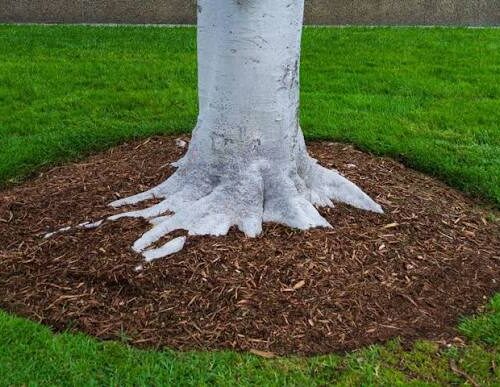
Buying mulch in bags is one of the most expensive ways to move woodchip around a city. A 50 litre bag at $12 works out to roughly $240 per cubic metre. The same material delivered in bulk costs $60 to $100. If you are mulching more than about 15 square metres, bulk mulch is the only sensible option.
This guide covers the calculation, the product types, real delivery pricing, and the quality checks that separate a good load from a truckload of contaminated rubbish.
Working Out How Much You Need
The maths is simple and people still get it wrong.
Area (m²) × depth (m) = volume (m³) At the recommended 75mm depth:
| Garden area | Mulch needed at 75mm |
| 10 m² | 0.75 m³ |
| 20 m² | 1.5 m³ |
| 50 m² | 3.75 m³ |
| 100 m² | 7.5 m³ |
| 200 m² | 15 m³ |
At 100mm depth, multiply your area by 0.1 instead. Order 10 percent over your calculation. Bulk mulch settles during transport and spreading, and running short means paying a second delivery fee for half a cubic metre.
Depth guidance
- 50mm: minimum useful depth, expect weeds through
- 75mm: the sweet spot for most garden beds
- 100mm: better weed suppression, good for coarse chip and pathways
- 150mm+: too deep. Water struggles to reach the root zone
The Main Bulk Mulch Products
Recycled forest mulch / eucalypt blend
Mixed particle size, stringy texture that knits together and stays on slopes. Made from recycled garden organics. The best value bulk mulch in most Australian landscape yards.
Hardwood chip
Screened and uniform, sometimes coloured. Long lasting and tidy. Good for visible front garden beds.
Pine bark
Graded fine, medium or nuggets. Slightly acidic, slow breakdown, attractive dark colour. Ideal for azaleas, camellias, gardenias and blueberries. Floats in heavy rain, so avoid slopes and areas near drains.
Arborist wood chip
Fresh chipper output, mixed wood, bark and leaf. Often free from tree crews. Breaks down fast and feeds soil generously. Chunky and rustic looking.
Composted mulch and soil conditioner
Fully composted material, dark and fine. More a soil amendment than a mulch. Excellent for turning over into beds.
Sugar cane and lucerne
Sold in bales rather than bulk. Fast breakdown, high nutrients, best for vegetable gardens.
Coloured mulch
Dyed black, red or brown. Sharp for one season, faded by the second. Costs a premium for appearance only.
What Bulk Mulch Costs
Indicative 2026 pricing per cubic metre, Sydney metropolitan landscape yards:
- Recycled forest mulch: $45 – $75
- Hardwood chip: $65 – $100
- Pine bark, graded: $75 – $120
- Composted soil conditioner: $70 – $110
- Coloured hardwood: $90 – $140
- Premium decorative bark: $110 – $180
Delivery:
- Small tipper (up to 3 m³): $60 – $100
- Standard tipper (4 – 8 m³): $80 – $150
- Semi-load (20 m³+): $200 – $400
- Bulk bag delivery (1 m³ bags, crane truck): $40 – $80 per bag on top of product
Most yards offer free or discounted delivery over a threshold, commonly 5 or 10 cubic metres. Ordering bulk mulch with a neighbour and splitting the load is a genuinely good way to hit that threshold.
Bulk vs bagged, properly compared
A 50 litre bag at $12 equals $240 per cubic metre. Bulk forest mulch delivered at $60 per cubic metre plus $100 delivery, on a 5 cubic metre order, works out to $80 per cubic metre. That is a third of the price, and you are not flattening thirty plastic bags afterwards.
Delivery Logistics
Think this through before you order.
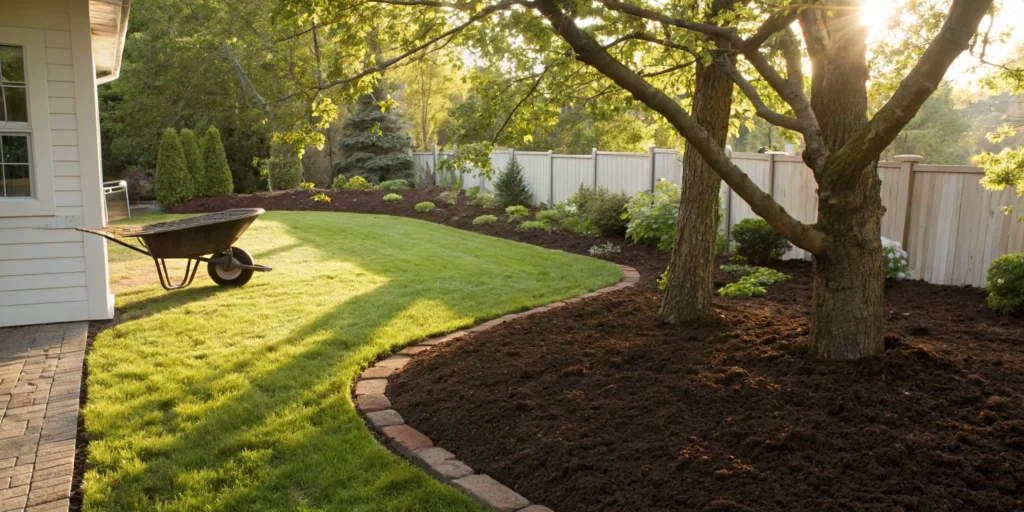
Where will it go? Driveways are standard. Lay a tarp first to keep the concrete clean and make the last barrowload easy to scrape up.
Truck access. Standard tippers need about 3 metres of width and 3.5 metres of overhead clearance. Low branches, carports and power lines matter.
Council rules. Do not have mulch tipped on the nature strip or road without checking. Blocking a footpath is an offence in most LGAs.
Timing. A pile of bulk mulch on your driveway is your problem from the moment the truck leaves. Do not order Friday afternoon if you are away for the weekend. Fresh mulch heats up and can start to smell if left piled for more than a week.
Bulk bags. For tight sites, 1 cubic metre bags craned into position are worth the premium. They also let you place material at multiple points around the property.
Quality: What to Check on Delivery
Recycled mulch in NSW is regulated under the NSW EPA’s mulch resource-recovery requirements, which set limits on physical and chemical contaminants before mulch can be applied to land. Suppliers should be able to tell you which order their product complies with.
Inspect the load before the truck leaves:
- No plastic, glass, metal or wire fragments. These are the clearest sign of a poorly screened recycled product.
- Smell. Earthy is good. Sour, vinegary or ammonia-like means anaerobic storage, and the material may be phytotoxic. Spread it and air it for a week before use.
- Consistency. Particle size should match the grade you paid for.
- Weed seed. Visible seed heads suggest the composting process did not reach pasteurisation temperature.
- Excessive fines. A load that is mostly dust will compact and shed water.
Spreading Efficiently
Wet the soil first. Barrow to the far end of the bed and work back toward the pile, so you are never wheeling over fresh mulch. Rake to an even depth rather than eyeballing it. Keep a clear 100mm collar around every trunk and stem, and 300mm clearance from house walls and slab edges. Water again once spread to settle the material.
A rough guide on labour: one person can spread about 2 to 3 cubic metres of bulk mulch per hour with a barrow and rake on open beds, much less on terraced or planted-out gardens. Research from the University of Queensland on street trees shows why healthy landscapes provide value beyond appearance.