
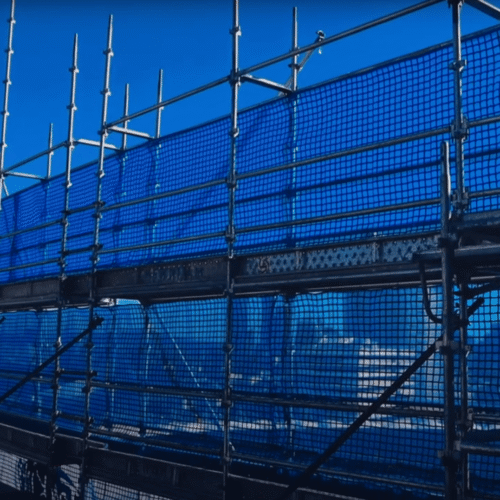
In Australia, the answer is rarely one single document. It is a small set of Standards and duties that work together, and their application depends on whether the mesh is being used as containment, screening, or wind control.
What is the main Australian Standard used for scaffold mesh installation?
The main reference point is AS/NZS 1576 (Scaffolding series), because it covers scaffold systems and components and how they are used safely. In practice, scaffold mesh installation is assessed as part of the overall scaffold configuration and its performance under site conditions.
AS/NZS 1576 is commonly read alongside the scaffold design, manufacturer instructions, and the site’s risk controls.
How does AS/NZS 1576 apply to scaffold mesh installation?
AS/NZS 1576 focuses on scaffold selection, assembly, stability, access, and safe use. Mesh can change how a scaffold behaves, especially in wind, so scaffold mesh installation needs to be considered in the same way any other attachment or sheeting would be.
They typically need to confirm the mesh does not compromise stability, tie patterns, or load assumptions. If the mesh increases wind loading, additional ties, engineering checks, or a different mesh type may be required.
Which Standard covers scaffold access, platforms, and edge protection that mesh may interact with?
AS/NZS 1576.1 and the wider AS/NZS 1576 set deal with scaffold requirements that mesh can affect, including edge protection and platform arrangements. Even though mesh is not a handrail system, scaffold mesh installation cannot reduce the effectiveness of guardrails, midrails, toe boards, or access points.
They should ensure mesh fixing does not create trip hazards, snag points, or gaps around gates, ladders, and stair modules.
What does AS/NZS 4576 require for scaffold erection and inspection practices?
AS/NZS 4576 (Guidelines for scaffolding) is a key companion document for safe erection, alterations, and inspections. It guides how scaffolds should be planned and checked, which is where scaffold mesh installation often fails if it is added late without reviewing the risk profile.
They usually need inspection routines that include mesh condition, fixing integrity, and any signs of tearing, UV degradation, or loosening after high winds.
Do WHS laws and Regulations affect scaffold mesh installation in Australia?
Yes, WHS duties are central because Australian Standards support, but do not replace, legal obligations. Under WHS laws, they must manage risks so far as is reasonably practicable, and scaffold mesh installation is part of controlling the risk of falling objects and public exposure.
In most states and territories, the model WHS Regulations require specific controls for high risk construction work. Mesh may be one control, but only if it is suitable, installed correctly, and maintained.
Which Safe Work Australia guidance is most relevant to scaffold mesh installation?
Safe Work Australia’s model Code of Practice for Managing the risk of falls at workplaces and scaffold guidance materials are commonly used by duty holders. They help interpret what “adequate” controls look like on real sites, including when scaffold mesh installation is appropriate for falling object control.
They should also review state regulator guidance, such as SafeWork NSW or WorkSafe Victoria advisories, because enforcement expectations can differ slightly.
When is an engineer required for scaffold mesh installation?
An engineer is typically needed when mesh materially increases wind loads or changes the scaffold’s design assumptions. If scaffold mesh installation involves full height wrapping, corners, or long continuous runs on exposed sites, engineering input is often the safest pathway.
They may also need sign off if the scaffold is outside standard configurations, is very high, is near public areas, or uses mixed systems.
How do wind loads influence scaffold mesh installation requirements?
Wind is often the deciding factor for whether mesh is acceptable, and what ties and bracing are needed. Because scaffold mesh installation increases surface area, it can act like a sail, raising both uplift and lateral loads.
Temporary structures generally require a site-specific wind assessment that considers local conditions, including coastal zones, high-rise corridors, and exposed open plains. They may also need a plan for partial removal during severe wind events where this is required by the structural design or SWMS.
What fixing methods are expected under Australian Standards and common practice?
Australian Standards tend to set performance expectations rather than a single “approved” tie. For scaffold mesh installation, they generally need fixings that resist wind flutter, do not damage the mesh unnecessarily, and remain secure over time.
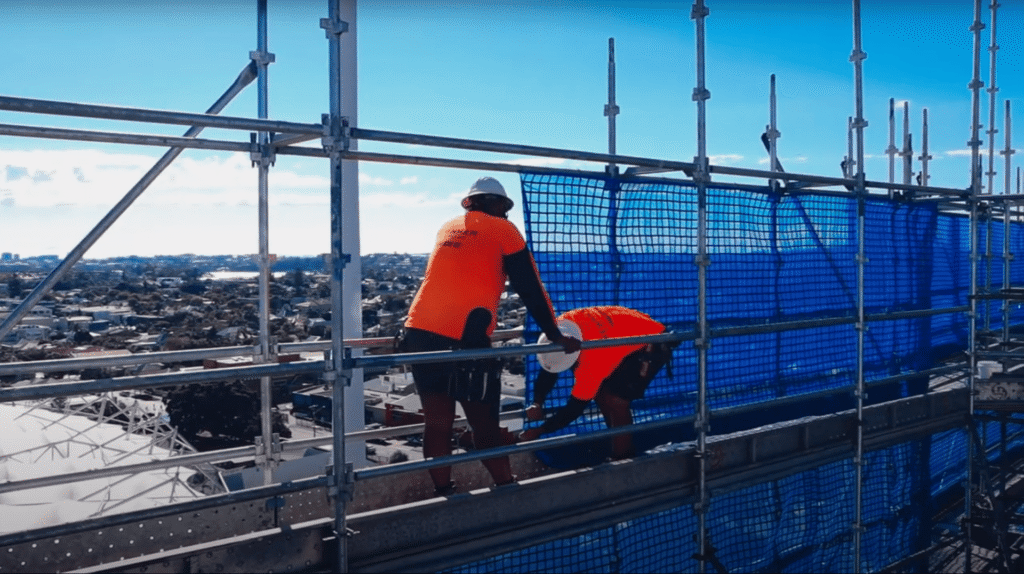
They commonly use UV stabilised cable ties, lacing, clips, or proprietary fastening systems, spaced to suit the mesh type and exposure. They should follow the mesh manufacturer’s instructions, because the fixing pattern often drives the rated performance.
How should scaffold mesh installation be documented for compliance?
They should be able to show that controls were planned, communicated, and maintained. For scaffold mesh installation, documentation typically includes a SWMS, scaffold handover or inspection records, mesh product data, and any engineering design or tie pattern details.
If the scaffold changes, they usually need to update the SWMS and confirm a competent person has inspected the altered scaffold before use resumes.
What role do manufacturer instructions play in scaffold mesh installation?
Manufacturer requirements are important because scaffold mesh products can differ considerably in shade factor, permeability, tensile strength, edge finishing, and approved fixing methods. Scaffold mesh installation requirements should therefore follow the manufacturer’s specifications and intended application rather than relying solely on what appears convenient on site.
They should confirm the mesh is rated for scaffolding use, check UV and fire related claims where relevant, and avoid mixing fixing systems that void the product guidance.
Are there fire performance expectations for scaffold mesh installation in Australia?
Fire risk depends on the project and location, but it should always be assessed. Scaffold mesh installation near hot works, external cladding works, or combustible materials may introduce added hazards if the mesh is not appropriate.
They should review the project’s fire controls, hot work permits, and any client requirements for flame retardant mesh. They also need to remember that “flame retardant” does not mean “fireproof.”
How does scaffold mesh installation relate to falling object controls?
Mesh is often used to reduce the likelihood of small items leaving the scaffold zone, but it is not a complete falling object system on its own. Scaffold mesh installation should sit alongside toe boards, brick guards where needed, debris netting if specified, exclusion zones, and good housekeeping.
They should assess what size of debris is being generated. For example, grinding dust, offcuts, and hand tools each require different combinations of controls.
What extra considerations apply when the public is nearby?
If works are over footpaths, roads, entries, or adjacent properties, expectations rise sharply. Scaffold mesh installation may be part of a broader public protection plan that includes gantries, overhead protection, hoardings, and traffic management.
They should coordinate with local councils and road authorities where permits apply, and ensure the scaffold design addresses both containment and structural effects.
What inspection and maintenance cadence is expected once mesh is installed?
They should inspect mesh at the same frequency as scaffold inspections, and also after events that could affect integrity. Scaffold mesh installation can degrade quickly after high winds, UV exposure, or repeated handling during loading activities.
They typically check for tears, pulled eyelets, broken ties, loose edges, and areas that flap excessively. Any damaged section should be repaired or replaced promptly, because partial failure can increase wind loading unpredictably.
What common compliance mistakes happen with scaffold mesh installation?
The most common issue is treating mesh as a simple add on rather than a design variable. Scaffold mesh installation can become non compliant when they fully wrap a scaffold without reviewing wind loads, or when they remove ties to access materials and do not reinstate them.
Other common failures include poor edge finishing, inadequate fixing density, blocked access points, mesh rubbing on sharp edges, and missing documentation that shows the change was assessed and inspected.
How can they quickly check if scaffold mesh installation is likely to meet expectations?
They can start with three quick checks: suitability, stability, and supervision. For scaffold mesh installation, that means the mesh is fit for purpose, the scaffold remains stable under expected wind, and a competent person is overseeing changes.
They should also confirm inspections are current, manufacturer instructions are followed, and the SWMS reflects how the mesh is actually being used on the job.
What is the best practical approach to selecting the right Australian Standards for scaffold mesh installation?
They should treat it as a set: AS/NZS 1576 for scaffold requirements, AS/NZS 4576 for guidance and inspection practices, and WHS Regulations and Codes for legal duties. From there, scaffold mesh installation should be aligned to the scaffold design, the site wind profile, and the risk of falling objects.
If conditions are complex, they are usually better off involving an engineer early rather than retrofitting controls after issues appear.
FAQs (Frequently Asked Questions)
What is the primary Australian Standard governing scaffold mesh installation?
The main Australian Standard for scaffold mesh installation is AS/NZS 1576 (Scaffolding series), which covers scaffold systems, components, and their safe use. Scaffold mesh installation is assessed as part of the overall scaffold configuration under this standard.
How does scaffold mesh installation impact scaffold stability according to AS/NZS 1576?
Scaffold mesh can alter scaffold behaviour, especially by increasing wind loads. AS/NZS 1576 requires that mesh installation does not compromise scaffold stability, tie patterns, or load assumptions. Additional ties or engineering checks may be needed if wind loading increases due to the mesh.
Which standards address scaffold access and edge protection in relation to mesh?
AS/NZS 1576.1 and the wider AS/NZS 1576 series address scaffold access, platforms, and edge protection that may interact with scaffold mesh. Mesh should not compromise the effectiveness of guardrails, midrails, toe boards, or access points, and it should be installed without creating trip hazards or unsafe gaps around access elements. Following scaffold safety requirements helps maintain safe access and protection throughout the project.
What role does AS/NZS 4576 play in scaffold mesh installation safety?
AS/NZS 4576 provides guidelines for scaffolding erection, alterations, and inspections. It emphasizes planning and checking scaffolds comprehensively. Scaffold mesh installation often fails safety checks if added late without risk review; regular inspections should include mesh condition and fixing integrity.
How do WHS laws influence scaffold mesh installation practices in Australia?
WHS laws require managing risks as reasonably practicable, making scaffold mesh installation a key control for falling object hazards and public safety. Australian Standards support but do not replace legal obligations; suitable selection, correct installation, and maintenance of mesh are essential under WHS regulations.
When is engineering input necessary for scaffold mesh installation?
Engineering involvement is typically required when scaffold mesh materially increases wind loads or alters design assumptions—such as full-height wrapping, corner installations, long continuous runs on exposed sites, or when scaffolds are very high or near public areas—to ensure structural safety and compliance.